
[Narration, archive and Survivor testimony]
After Kristallnacht, and under mounting moral pressure, the British government made it possible for Jewish children to come to England. This project became known as Kindertransport and allowed some 10,000 children to escape the Nazis. However, their parents were not allowed to accompany them.
Vera was 10-years-old when her parents took her to catch the Kindertransport train out of Prague. She describes the scene at Prague station. The children boarding the train had to say goodbye to their parents. Some waved white handkerchiefs as the train pulled out. It was the last time most, if not all, of the children on the train, saw their parents again.
[Narration, archive and Survivor testimony]
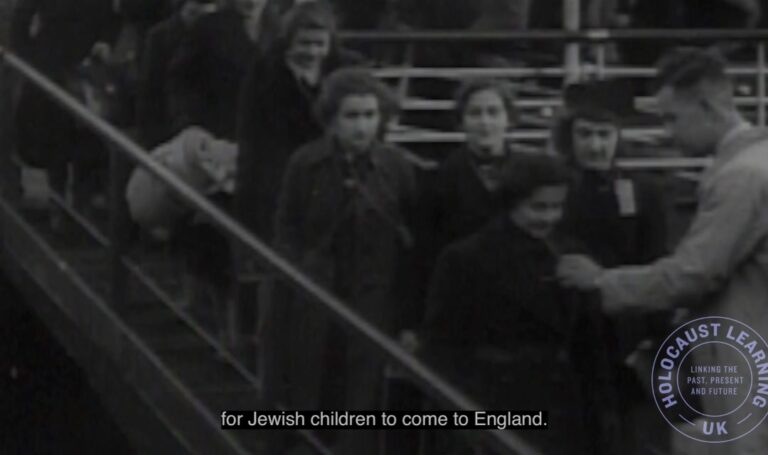
After Kristallnacht, and under mounting moral pressure, the British government made it possible for Jewish children to come to England. This project became known as Kindertransport and allowed some 10,000 children to escape the Nazis. However, their parents were not allowed to accompany them.
Vera was 10-years-old when her parents took her to catch the Kindertransport train out of Prague. She describes the scene at Prague station. The children boarding the train had to say goodbye to their parents. Some waved white handkerchiefs as the train pulled out. It was the last time most, if not all, of the children on the train, saw their parents again.
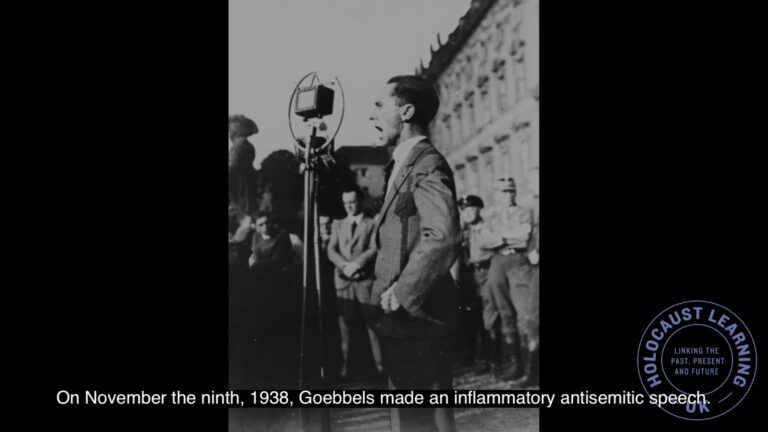
Alfons (10yrs) and Ann (8yrs) describe the destruction and aftermath of Kristallnacht.
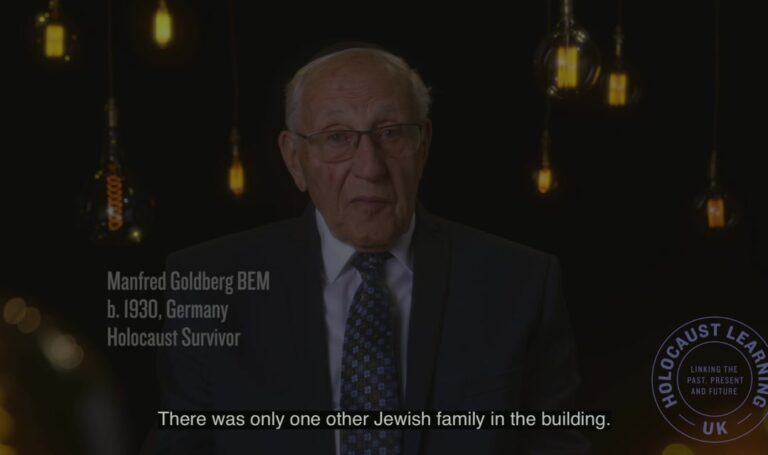
Manfred, then aged 11, describes how a non-Jewish neighbour warned his father to stay hidden ahead of Kristallnacht.
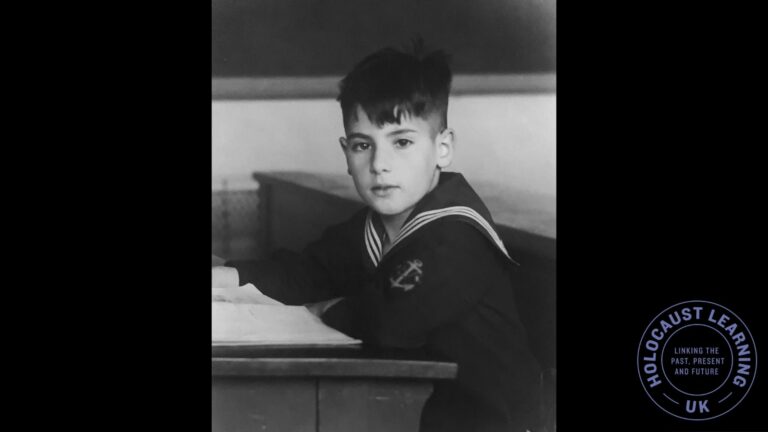
Bob was 14 when he came to the UK from Germany on Kindertransport. He describes his experiences on arrival.
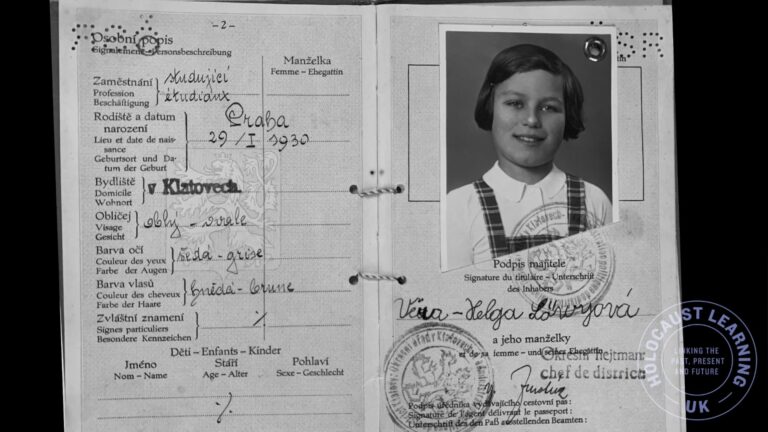
Vera was a 10-year-old Kindertransport child from Czechoslovakia. She describes how her father spoke to her English guardians on her arrival.